
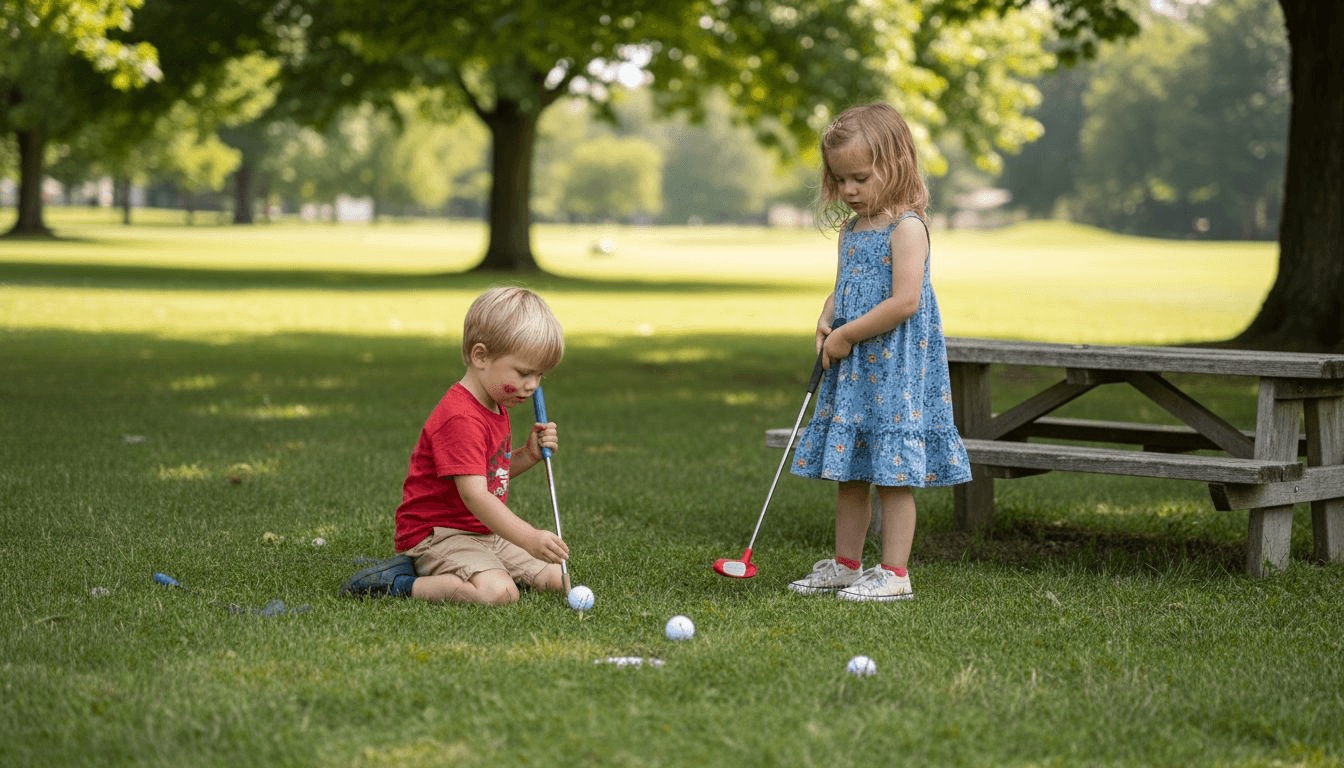
Many believe structured golf training should wait until children are older and can handle adult-style instruction. Research tells a different story. Introducing golf through play from age 2 builds motor skills, cognitive development, and emotional foundations that drive lifelong participation. For coaches and academy owners targeting young learners, understanding how to balance fun with fundamentals unlocks sustained engagement and skill growth.
Table of Contents
- Introduction To Early Years Golf Development
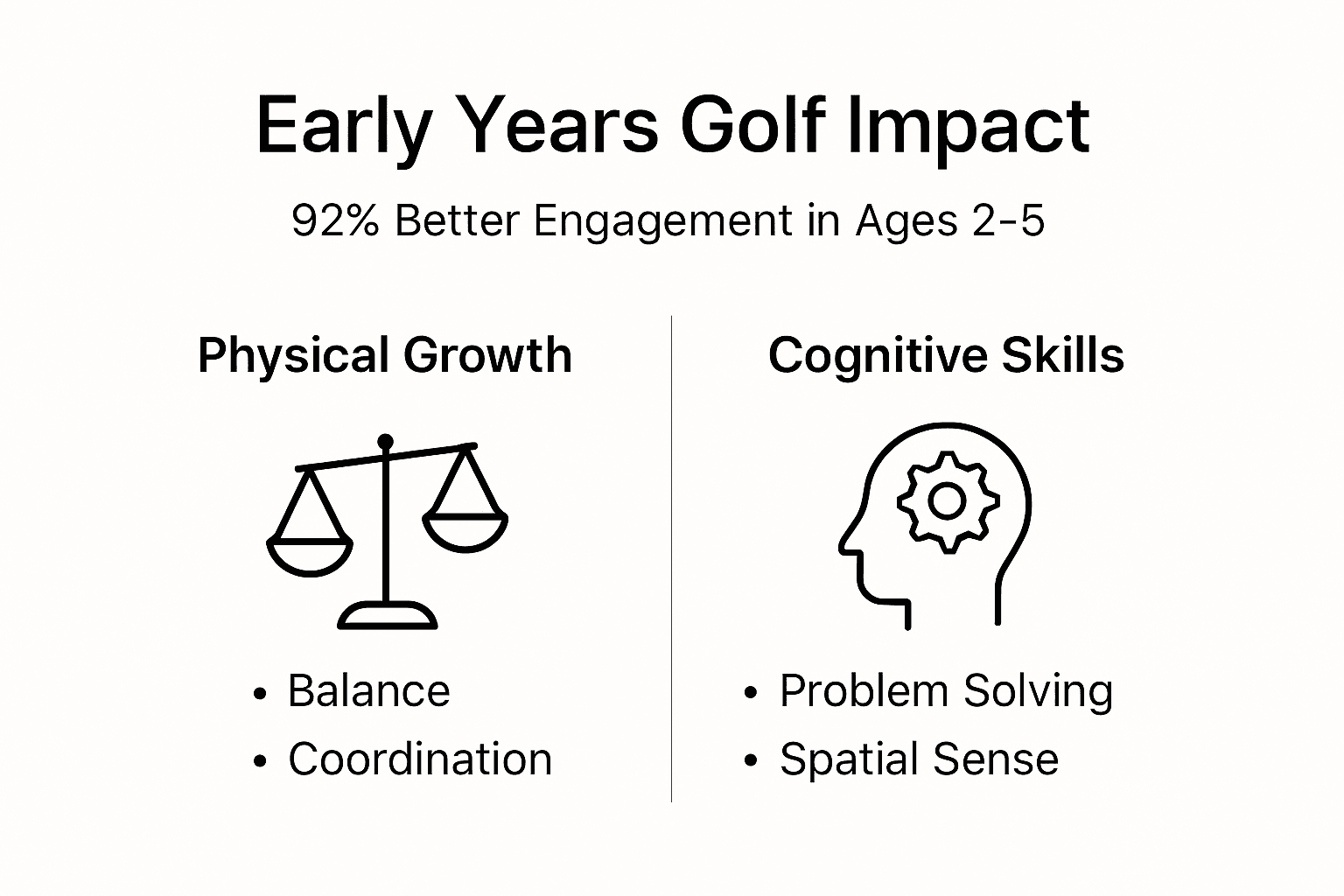
- Physical, Cognitive, And Emotional Benefits Of Early Golf Training
- Effective Coaching Methodologies For Ages 2 To 5
- Equipment Selection And Safety For Toddlers And Preschoolers
- Parental Roles In Early Golf Learning
- Common Misconceptions About Early Golf Coaching
- Long-Term Athlete Development Implications Of Starting Golf Early
- Conclusion And Practical Steps For Implementation
- Find Out How Tigertots Can Help Your Early Years Golf Program Thrive
- Frequently Asked Questions About Early Years Golf Development
Key takeaways
| Point | Details |
|---|---|
| Motor and emotional growth | Structured golf play from age 2 accelerates coordination, balance, patience, and confidence. |
| Game-based lessons work best | Short, fun activities like bullseye putting optimize retention and motivation for ages 2 to 5. |
| Parental involvement matters | Active parent participation strengthens engagement and learning outcomes during early years golf. |
| Equipment must fit | Lightweight, sized clubs prevent injury and support proper swing development for toddlers. |
| Avoid early competition | Focus on enjoyment and foundational skills rather than performance metrics or rankings. |
Introduction to early years golf development
Ages 2 to 5 represent a critical window for motor and cognitive skill development. During these years, children's brains form neural pathways at rapid rates, making this period ideal for introducing foundational athletic movements. Golf offers unique advantages because it combines physical coordination with cognitive challenges like spatial awareness and patience. The key is structuring exposure correctly.
Early golf programs should prioritize playful, pressure-free engagement. Forcing technical drills or competitive formats at this age creates frustration and disengagement. Instead, golf introduction at ages 2–3 promotes motor skills through casual exposure with structured lessons starting at age 4. This approach respects developmental readiness while building genuine interest.
Starting with casual play allows toddlers to explore golf without expectations. By age 4, children can handle short, structured sessions that introduce basic swings and putting. The TigerTOTS philosophy on early years golf demonstrates how graduated progression matches developmental stages. Fun remains the primary driver throughout.
Building confidence during these formative years sets up better long-term retention. Children who associate golf with positive experiences are more likely to continue playing as they grow. This foundation serves coaches and academies by creating a pipeline of engaged young golfers who transition smoothly into more advanced programs.
Key developmental milestones for early years golf include:
- Ages 2 to 3: Casual exposure through play, exploring clubs and balls without structured instruction
- Ages 3 to 4: Introduction of simple games like rolling balls or tapping putts
- Ages 4 to 5: Short structured lessons focusing on basic grips, swings, and putting techniques
- Throughout all ages: Emphasis on enjoyment, social interaction, and positive reinforcement
Physical, cognitive, and emotional benefits of early golf training
Golf develops critical hand-eye coordination and balance at early ages. Tracking a ball, aligning the body, and executing controlled swings challenge multiple physical systems simultaneously. These skills transfer beyond golf, supporting overall athleticism and physical literacy.
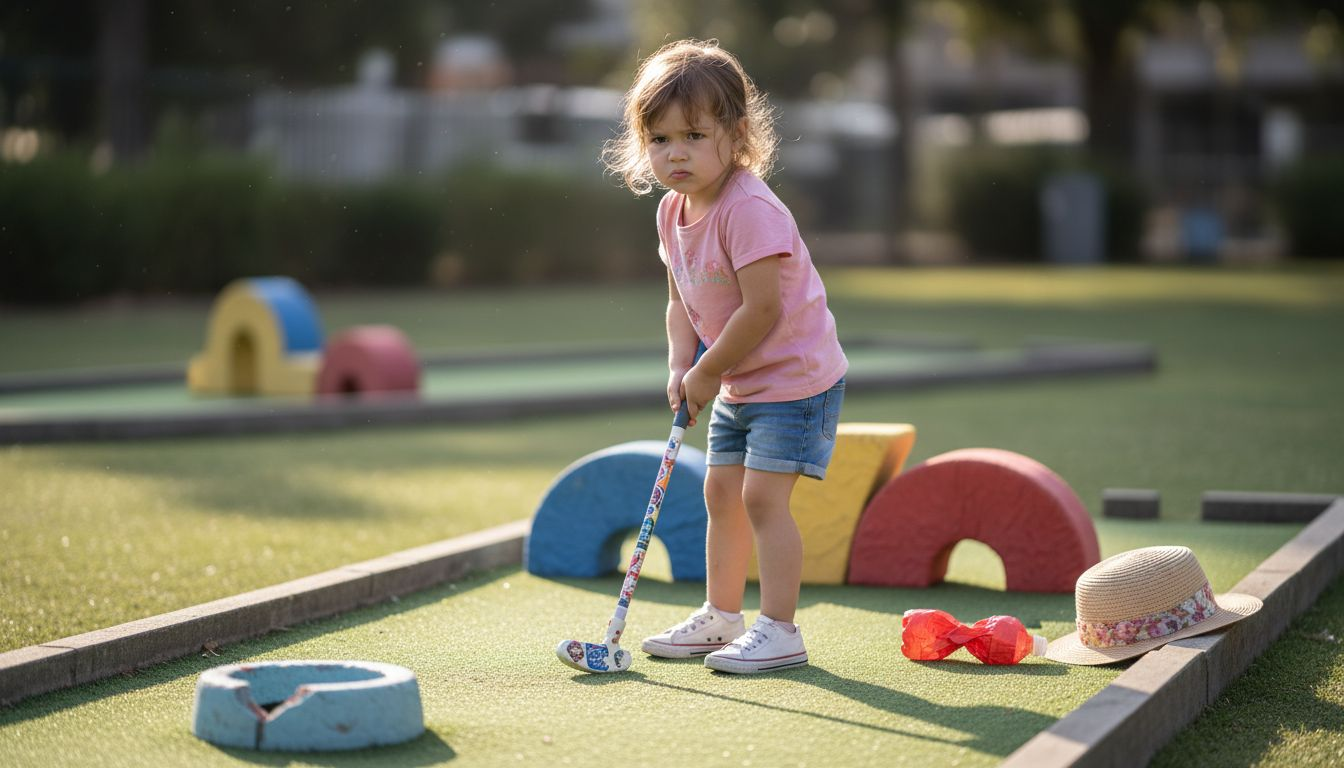
Cognitive benefits emerge through problem-solving and spatial reasoning. Even simple putting requires children to judge distances, angles, and force. These calculations build mathematical thinking and planning skills. Golf also teaches patience and delayed gratification as children learn that improvement takes practice.
Emotionally, golf fosters confidence and social skills. Successfully sinking a putt or hitting a target creates pride and self-efficacy. Group lessons encourage cooperation and turn-taking. Children learn to handle both success and setbacks in supportive environments.
Physical literacy from golf improves long-term sport adherence and physical activity into adulthood. Early exposure to movement patterns establishes habits that persist across a lifetime. This aligns with long-term athlete development models emphasizing broad physical foundations before specialization.
Early years golf programs like TigerTOTS demonstrate how structured play builds these attributes without pressure. The programs focus on joy and discovery, allowing children to develop naturally while gaining golf-specific skills.
"Starting golf early creates a foundation not just for the sport, but for lifelong physical activity and emotional resilience. The skills children gain translate across all areas of development."
Benefits of early golf training include:
- Enhanced hand-eye coordination and fine motor control
- Improved balance and core strength through swing mechanics
- Development of patience, focus, and emotional regulation
- Social skills through group activities and cooperative play
- Confidence building through achievable goals and positive feedback
Effective coaching methodologies for ages 2 to 5
Young children have limited attention spans, typically 2 to 5 minutes for focused activities. Coaching sessions must adapt to this reality. Fun, short, game-based lessons improve skill retention and motivation in children aged 2 to 5. Sessions should last 20 to 30 minutes maximum, incorporating frequent changes in activity.
Incorporating games maintains engagement while building skills. Bullseye putting challenges children to aim for targets of different sizes. Obstacle chipping courses add excitement and variety. These activities disguise skill development as play, keeping children motivated.
Child-driven learning models foster engagement and ownership. Rather than dictating every movement, coaches guide children to discover effective techniques. Asking questions like "What happens when you swing faster?" encourages experimentation and critical thinking.
Positive reinforcement drives progress and maintains motivation. Fun and positive coaching are top factors driving motivation and retention in young golfers. Celebrating small successes builds confidence and creates positive associations with golf.
Structured lessons should start around age 4, with introduction through play at ages 2 to 3. This timing respects developmental readiness while capitalizing on the critical learning window. Programs like the TigerTOTS play-based coaching methodology provide frameworks for age-appropriate progression.
Avoiding early competition or performance metrics prevents burnout. Comparing children or emphasizing outcomes over effort creates anxiety and diminishes enjoyment. Focus instead on personal progress and effort.
Pro Tip: Alternate skill drills with free play to keep energy and interest consistent. After practicing putting for 5 minutes, let children experiment with different clubs or create their own games.
Effective coaching strategies include:
- Sessions lasting 20 to 30 minutes with frequent activity changes
- Games like target putting, obstacle courses, and relay races
- Open-ended questions that encourage children to problem-solve
- Praise for effort and improvement rather than outcomes
- Licensed early years golf programs that provide proven curricula and coaching guides
Equipment selection and safety for toddlers and preschoolers
Choosing appropriate equipment prevents injury and supports proper technique development. Lightweight, balanced clubs sized for ages 2 to 5 improve comfort and swing mechanics and reduce injury risk. Adult clubs are too heavy and long, forcing compensations that ingrain poor habits.
Recommended starter sets typically include three clubs: a putter, pitching wedge, and 7 iron. This limited selection simplifies decision-making and covers essential skills. Putters should be 24 to 30 inches long depending on the child's height. Irons should weigh less than 200 grams.
Proper fit ensures clubs match the child's height and strength. When holding a club naturally, the grip should reach the child's waist. Clubs that are too long cause excessive bending or tiptoeing. Clubs that are too heavy lead to poor swing mechanics and potential strain.
Safety protocols protect children during practice. Controlled practice areas with clear boundaries prevent collisions. Close supervision ensures children use equipment correctly and follow instructions. Regular equipment checks identify wear or damage that could cause injury.
Avoiding adult-sized clubs and heavy materials prevents early frustration. Children struggling with inappropriate equipment quickly lose interest. Proper equipment makes learning enjoyable and achievable.
The TigerTOTS curriculum equipment guidelines specify exact recommendations for different age groups and skill levels. Following these standards ensures programs provide optimal learning conditions.
Equipment and safety essentials:
- Clubs no longer than waist height when held naturally
- Club weights under 200 grams for toddlers and preschoolers
- Starter sets with putter, pitching wedge, and 7 iron
- Designated practice areas with soft surfaces and clear boundaries
- Supervision ratios of 1 adult per 4 to 6 children maximum
Parental roles in early golf learning
Parent-child golf programs create nurturing, playful learning environments. Parental involvement in early golf programming improves engagement and learning outcomes for ages 2 to 5. When parents participate actively, children feel supported and valued, increasing motivation and effort.
Parental encouragement boosts child confidence and enjoyment. Positive comments during lessons reinforce effort and progress. Parents modeling enthusiasm for golf demonstrates that the activity is worthwhile and fun.
Involving parents increases retention and supports practice outside sessions. When parents understand drills and games, they can recreate activities at home. This extended practice accelerates skill development and maintains interest between formal lessons.
Parents should maintain positive attitudes and avoid pressure. Focusing on fun rather than performance prevents anxiety. Celebrating attempts rather than outcomes teaches resilience and growth mindset.
TigerTOTS parent-child golf programs structure sessions to maximize parental participation. Parents work alongside children during activities, strengthening bonds while supporting learning. The TigerTOTS founder insights on parent involvement explain how this approach differentiates early years programs from traditional junior golf.
Pro Tip: Provide parents with simple drills and games to practice at home. Share one or two activities after each session that require minimal setup and equipment.
Guidelines for parental involvement:
- Participate actively in lessons rather than observing from sidelines
- Focus praise on effort, creativity, and improvement
- Avoid comparing children or emphasizing competitive outcomes
- Practice recommended drills at home to reinforce learning
- Model positive attitudes toward challenges and setbacks
Common misconceptions about early golf coaching
Myth: Early coaching must focus on competition or performance metrics. Reality: Young children thrive when coaching prioritizes fun and skill development. Early golf coaching should prioritize fun and skill development rather than competition or technical drills. Introducing rankings or tournaments at this age creates pressure that diminishes enjoyment.
Myth: Toddlers are too young for any structured lessons. Reality: Casual exposure from age 2 supports development effectively. While formal instruction should wait until age 4, introducing golf through play at earlier ages builds familiarity and interest.
Myth: Young children require adult-style drill-focused coaching. Reality: Play-based, child-driven methods produce better outcomes. Technical instruction overwhelms young learners and ignores developmental stages. Games and exploration suit their learning styles better.
Focusing too early on outputs like driving distance causes burnout and disengagement. Children internalize messages that performance matters more than enjoyment. When outcomes fall short of expectations, they conclude they lack talent and quit.
Correct methodology prevents early burnout and promotes long-term passion. Age-appropriate approaches respect developmental readiness while building genuine interest. Programs like TigerTOTS certification on best practices for young children train coaches to avoid common pitfalls.
Common misconceptions include:
- Believing competition motivates young children when it often creates anxiety
- Assuming toddlers cannot benefit from any golf exposure
- Applying adult coaching methods to fundamentally different learners
- Emphasizing technical perfection over exploration and fun
- Expecting rapid skill progression rather than gradual development
Long-term athlete development implications of starting golf early
Physical literacy gained through golf in early years encourages lifetime physical activity. Children who develop movement competence and confidence maintain higher activity levels into adulthood. Early physical literacy in golf is linked to higher long-term sport adherence and future performance.
Early skill acquisition improves future golf performance and retention rates. Children starting at ages 2 to 5 develop smoother swing mechanics and better course management by adolescence. They also demonstrate greater passion for the game because positive early experiences created lasting associations.
Sustained engagement leads to a stronger pipeline of skilled players. Academies investing in early years programs cultivate future members and competitors. These players progress more naturally through junior and adult programs.
Case studies reveal programs starting at ages 2 to 5 yield long-term benefits. Participants show higher retention rates and greater skill levels at age 10 compared to those starting at age 6 or later. The TigerTOTS long-term development framework documents these outcomes across multiple countries.
| Program | Structure | Parental Involvement | Long-Term Retention |
|---|---|---|---|
| TigerTOTS | Parent-child sessions, 30 min, ages 2 to 5 | High, parents participate actively | 85% continue past age 7 |
| Traditional Junior | Group lessons, 60 min, ages 6+ | Low, parents observe only | 52% continue past age 9 |
| Club Intro Programs | Drop-off camps, 90 min, ages 5+ | Minimal, occasional updates | 48% continue past age 8 |
This knowledge supports coaches in investing early for maximum future impact. Programs targeting ages 2 to 5 create foundations that benefit participants and organizations for years.
Conclusion and practical steps for implementation
Starting golf early with age-appropriate, fun, and safe methods builds lifelong participants and skilled players. The evidence clearly supports introducing golf through play from age 2, transitioning to short structured lessons by age 4. Prioritizing enjoyment over performance creates positive associations that drive sustained engagement.
For coaches and academies ready to implement or enhance early years programs, consider this checklist:
- Design programs with 20 to 30 minute sessions incorporating frequent activity changes
- Train coaches in child-driven, play-based methodologies rather than adult instruction models
- Provide lightweight, properly sized equipment and maintain strict safety protocols
- Structure programs to maximize parental involvement and provide home practice guidance
- Establish clear safeguarding policies and supervision ratios
- Measure success through engagement and enjoyment rather than technical proficiency
Leveraging proven curricula like TigerTOTS licensing for early years programs accelerates implementation and ensures best practices. These frameworks provide lesson plans, coaching guides, and ongoing support that reduce development time and improve outcomes.
The benefits of parental involvement and positive reinforcement cannot be overstated. When families participate together in supportive environments, children develop skills and passion simultaneously. This combination creates the foundation for lifelong golf participation.
Find out how TigerTOTS can help your early years golf program thrive
Implementing evidence-based early years golf programming requires expertise, curriculum, and ongoing support. TigerTOTS offers a globally recognized curriculum specifically designed for ages 2 to 5, combining developmental science with golf instruction.
Certification programs equip coaches with play-based teaching methods, child development knowledge, and safety protocols. Training covers age-appropriate progressions, game design, and effective parental engagement strategies. Certified coaches gain confidence delivering programs that balance fun with skill building.
Licensing options help academies implement proven structures without developing curricula from scratch. License holders receive complete lesson plans, marketing materials, equipment recommendations, and business support. This turnkey approach accelerates program launch and ensures quality standards.
Join a supportive community focused on child-first, play-based golf learning. TigerTOTS connects coaches worldwide, facilitating knowledge sharing and continuous improvement. Resources and support ensure programs remain safe, engaging, and effective as they grow.
Frequently asked questions about early years golf development
What is the ideal starting age for golf lessons?
Casual exposure through play can begin at age 2, allowing toddlers to explore clubs and balls without structure. Formal lessons should start around age 4 when children can follow simple instructions and maintain focus for short periods. This graduated approach respects developmental readiness while building early interest.
How long should each early years golf lesson be?
Sessions for ages 2 to 5 should last 20 to 30 minutes maximum. Young children have limited attention spans, typically 2 to 5 minutes for focused activities. Shorter sessions with frequent activity changes maintain engagement and prevent fatigue or frustration.
What role should parents play during golf sessions?
Parents should participate actively rather than observe from sidelines. Working alongside children during activities strengthens bonds and improves learning outcomes. Parents can support home practice by understanding drills and games introduced during sessions, extending learning between formal lessons.
What essential equipment is recommended for toddlers?
Start with three clubs: a putter, pitching wedge, and 7 iron. Clubs should be lightweight (under 200 grams) and sized to waist height when held naturally. Proper fit prevents injury and supports correct swing development. The TigerTOTS early years golf program details specify exact equipment standards.
How can I avoid causing burnout in young learners?
Prioritize fun and exploration over technical perfection or competition. Use games and child-driven learning rather than rigid drills. Celebrate effort and improvement instead of outcomes. Keep sessions short and varied to maintain interest. When golf remains playful and pressure-free, children develop lasting passion rather than burnout.