
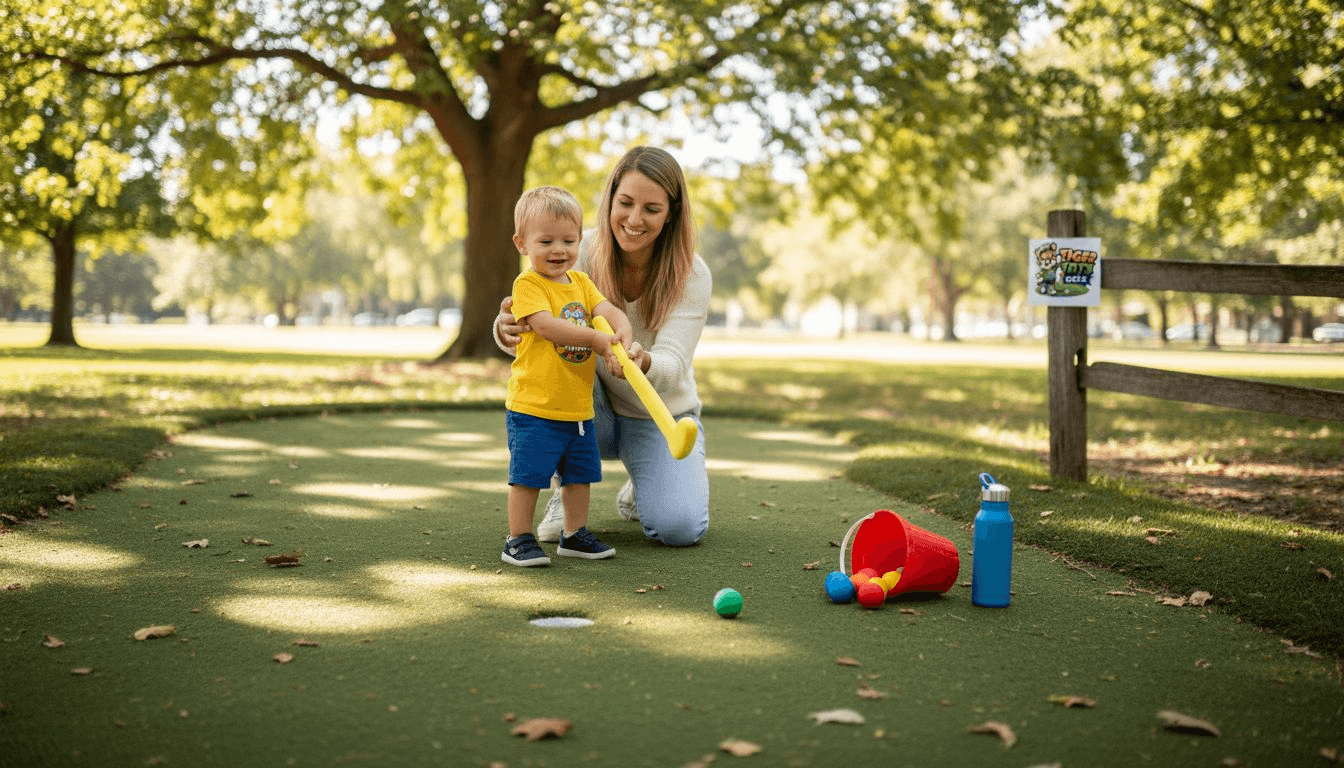
Golf coaches and academies constantly seek effective ways to engage toddlers aged 2-5 in parent-child golf programs, yet many struggle to find structured, age-appropriate activities that maintain motivation and deliver measurable progress. Programs using playful, age-appropriate challenges increase toddler engagement by over 60% compared to traditional drills. This article provides selection criteria, activity examples, program comparisons, and implementation strategies to help you build successful toddler golf experiences.
Table of Contents
- Selection Criteria For Parent-Child Golf Programs
- Age-Appropriate Golf Activities For Toddlers (2-3 Years)
- Fun And Engaging Program Features For Ages 4-5
- Equipment And Safety Considerations For Toddlers
- Comparison Of Popular Parent-Child Golf Programs
- Parent-Child Engagement Techniques To Improve Retention
- Situational Recommendations For Golf Coaches And Academies
- Discover TigerTOTS Global For Toddler Golf Programs
- Frequently Asked Questions About Parent-Child Golf Activities For Toddlers
Key takeaways
| Point | Details |
|---|---|
| Age-appropriate sessions | Keep lessons 30-45 minutes with active parent involvement to match toddler attention spans and boost engagement. |
| Safe equipment matters | Use lightweight, child-sized clubs (limit to 3) and foam balls tailored for ages 2-5 to ensure safety and comfort. |
| Challenge beats drills | Games and interactive challenges outperform repetitive drills, increasing motivation and practice time significantly. |
| Structured curricula win | Programs like TigerTOTS Golf offer measurable milestones and proven frameworks ideal for academies and coaches. |
| Match environment to goals | Select programs based on your coaching setup, parental availability, and resource levels for optimal outcomes. |
Selection criteria for parent-child golf programs
Choosing the right toddler golf program requires evaluating factors that align with developmental needs and maximize engagement. Start with session length. Optimal toddler golf lesson length should not exceed 45 minutes to maintain engagement and learning efficacy. Shorter sessions prevent fatigue and keep young learners eager to return.
Parental involvement is equally critical. Programs that actively integrate parents create stronger motivation and skill retention compared to coach-only formats. Parents serve as emotional anchors, helping toddlers feel secure while attempting new movements and challenges.
Equipment safety cannot be overlooked. Child-sized, lightweight clubs and soft foam balls reduce injury risks while building confidence. Avoid adult equipment scaled down, which often lacks proper balance for tiny hands and developing motor skills.
Focus on fun over fundamentals. Challenge-based games capture toddler interest far better than repetitive drills. Look for programs incorporating storytelling, colorful props, and team activities that transform skill-building into play.
Structured curricula with measurable milestones help you track progress and communicate value to parents. The program selection philosophy emphasizes progressive skill development tailored to each age group. Scalability matters too—programs with licensing options allow you to expand offerings as demand grows.
Consider these key evaluation points:
- Session duration matches toddler attention spans (30-45 minutes)
- Active parent participation built into activities
- Safe, age-appropriate equipment designed for 2-5 year olds
- Challenge-based games prioritized over drills
- Clear progression pathways with measurable goals
- Licensing or certification details supporting program expansion
Pro Tip: Visit toddler golf session structure resources to see how leading programs balance activity variety with attention span limitations.
Age-appropriate golf activities for toddlers (2-3 years)
Toddlers aged 2-3 need ultra-simple activities that prioritize motor skill development over technique. Structured golf lessons for children aged 2-3 improve motor skills, hand-eye coordination, and social interaction while fostering positive early experiences. Keep sessions short, ideally 30-40 minutes, to align with their limited attention capacity.
Start with basic putting games using large targets and foam balls. Create a "Find the Flag" challenge where toddlers and parents search for colorful flags around the practice area, then attempt short putts when they locate each one. This combines movement, discovery, and skill practice in an engaging package.
Obstacle courses work exceptionally well for this age group. Set up foam hurdles, tunnels, and cones that toddlers navigate while carrying or rolling balls. Parents walk alongside, offering encouragement and modeling movements. The physical activity burns energy while building balance and coordination essential for golf swings.
Chipping activities should use the gentlest possible approach. Position large buckets or hula hoops on the ground as targets, allowing toddlers to sweep foam balls toward them with oversized plastic putters. Success comes easily, building confidence without frustration.
Mini match play introduces light competition. Pair toddlers with parents for simple team challenges like "who can roll the ball closest to the cone?" Keep scoring informal and celebrate all efforts equally to maintain positive associations with the sport.
Consider these activity elements for ages 2-3:
- Ultra-short putting distances (3-5 feet maximum)
- Foam balls exclusively to prevent injury
- Large, colorful targets that guarantee frequent success
- Parent-guided movements with hand-over-hand assistance
- Movement-based games incorporating golf skills naturally
- Constant positive reinforcement and enthusiastic praise
Pro Tip: The parent-child program activities demonstrate how structured progressions adapt to toddler developmental stages. Review age-appropriate toddler golf activities for additional inspiration tailored to motor skill milestones.
Fun and engaging program features for ages 4-5
As toddlers reach 4-5 years, their attention spans and physical capabilities expand, allowing for richer program features. Challenge-based activities increased attention spans by 45% and practice time by 30% relative to traditional repetitive drill formats. This age group thrives on games with clear objectives and immediate feedback.
Golf trivia adds cognitive engagement between physical activities. Ask simple questions like "What do we call the short grass around the hole?" and reward correct answers with bonus attempts or small prizes. This breaks up physical exertion while teaching golf vocabulary.
Parent-child team challenges create bonding opportunities. Try relay races where parents and toddlers alternate shots toward a target, or synchronized putting where both must sink balls within three attempts to score points. The collaborative element reduces pressure while amplifying enjoyment.
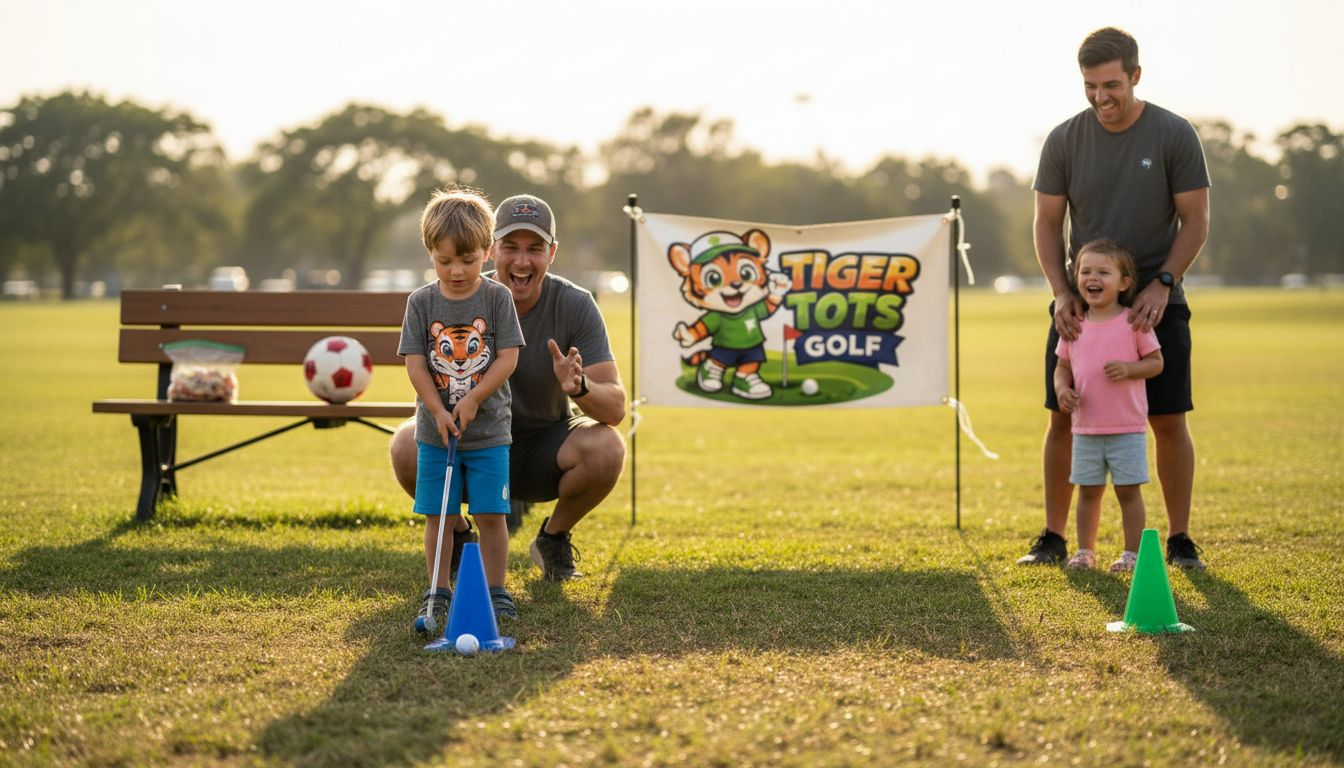
Storytelling enriches activities immensely. Frame putting games as adventures, such as "help the ball find its way home through the enchanted forest" while navigating around colorful cones. Narrative context transforms mundane drills into memorable experiences that toddlers eagerly anticipate.
Sessions can extend to 45-60 minutes for this age group, but vary activities every 10-12 minutes. Alternate between putting, chipping, movement games, and rest periods to maintain energy and focus.
Key engagement features for ages 4-5:
- Multi-step challenges requiring problem solving
- Simple golf trivia integrated between physical activities
- Parent-child team competitions with collaborative goals
- Storytelling frameworks that contextualize skill practice
- Colorful equipment and props enhancing visual appeal
- Immediate positive feedback loops and celebration rituals
Progression strategies:
- Start sessions with familiar warm-up games to build confidence
- Introduce one new challenge or skill per session maximum
- Incorporate parent-led mini lessons demonstrating new movements
- Use visual progress trackers (sticker charts, milestone badges)
- End with a favorite activity to ensure positive session closure
The engagement program features show how structured curricula layer complexity appropriately. Explore challenge-based golf games for additional activity ideas proven to boost motivation.
Equipment and safety considerations for toddlers
Proper equipment selection directly impacts toddler safety and program success. Choosing golf equipment that is lightweight, well balanced, and limited to 3 clubs enhances beginner toddlers' comfort and swing control, reducing injury risk. Oversized or poorly balanced clubs create frustration and potential harm.
Start with just three clubs: a putter, pitching wedge, and 7-iron. This simplified set prevents overwhelm while covering essential shot types toddlers will practice. Each club should weigh significantly less than adult versions, with grips sized for small hands.
Foam or soft plastic balls are mandatory for indoor and outdoor toddler programs. Hard balls pose serious injury risks given toddlers' unpredictable swings and limited spatial awareness. Soft balls allow full-speed practice without danger to participants or bystanders.
Club sizing depends on toddler height, not age. A 2-year-old standing 33 inches tall needs different equipment than a 4-year-old at 40 inches. Many programs use adjustable-length clubs that grow with the child, improving cost efficiency for families.
Supervision requirements differ from older children's programs. Maintain 1:4 coach-to-toddler ratios minimum, with parents actively participating rather than observing from sidelines. This ensures immediate intervention if safety issues arise while maximizing engagement.
Safety essentials for toddler golf:
- Lightweight clubs under 12 ounces total weight
- Grips no larger than 0.5 inches in diameter
- Foam or soft plastic balls exclusively during practice
- Equipment sized to individual toddler height measurements
- Spacious practice areas free of hard surfaces or obstacles
- Constant adult supervision within arm's reach
- Clear safety rules communicated to parents before each session
The equipment selection philosophy details how proper gear supports developmental milestones. Reference toddler golf safety guidelines for comprehensive safety protocols addressing common coaching scenarios.
Comparison of popular parent-child golf programs
Several established programs serve the toddler golf market, each with distinct approaches and ideal use cases. TigerTots Golf licensed curriculum for ages 2-5 offers structured progressions with worldwide availability, making it the most comprehensive option for academies seeking proven frameworks. Sessions integrate parents fully while following developmental milestones specific to each age group.
Golf Fore Kidz emphasizes social skill development alongside golf fundamentals. Their approach works well for community programs prioritizing confidence-building and peer interaction over competitive skill advancement. Parent involvement remains strong but focuses on emotional support rather than technical coaching.
Sportball's multi-sport approach enhances physical literacy in toddlers by combining golf with soccer, basketball, and other activities. This model suits facilities offering broad youth programming, though golf-specific skill development progresses more slowly than dedicated programs.
PGA Camps offer parent-inclusive sessions starting at age 4-5 with formal skill-building focus. Their structure appeals to families seeking traditional instruction methods and progression toward competitive play, though 2-3 year olds may find the approach too structured.
| Program | Age Range | Session Length | Parent Role | Licensing | Best For |
|---|---|---|---|---|---|
| TigerTOTS Golf | 2-5 years | 30-45 min | Active participant | Yes, global | Academies wanting structured curriculum |
| Golf Fore Kidz | 3-6 years | 45-60 min | Supportive observer | Limited | Community programs emphasizing social skills |
| Sportball | 2-5 years | 45 min | Active participant | Regional | Multi-sport facilities |
| PGA Camps | 4-7 years | 60 min | Periodic involvement | No | Clubs pursuing competitive pathways |
Pricing varies significantly. TigerTOTS Golf requires licensing fees but provides complete curriculum materials and ongoing support. Sportball operates franchise models with territory protections. PGA Camps typically charge per-session fees without long-term commitments.
Geographic availability affects decision-making. The program comparison philosophy explains how location, facility type, and coaching resources should guide selection. Review the TigerTOTS Golf curriculum, Sportball multi-sport golf program, and PGA junior golf camps to assess which model aligns with your academy's goals and constraints.
Parent-child engagement techniques to improve retention
Active parent participation transforms program outcomes dramatically. Programs with active parental participation increase skill retention by 25% and enjoyment by 40%. Parents serving as practice partners rather than spectators multiply learning opportunities and emotional rewards.
Coaches should explicitly train parents on their role during sessions. Provide simple scripts for encouragement, demonstrate proper spotting techniques, and model how to celebrate effort regardless of outcome. Many parents default to correction mode, inadvertently creating pressure that diminishes toddler enthusiasm.
Mini matches between parent-child pairs inject friendly competition without high stakes. Joint parent-child mini matches and cooperative challenges increase motivation by 55%. Structure games where success depends on teamwork rather than individual performance to reinforce collaborative dynamics.
Positive reinforcement must be specific and immediate. Instead of generic "good job" praise, parents should highlight exact behaviors: "I love how you kept your eyes on the ball that time." This specificity accelerates learning while building toddler confidence.
Progress recognition extends beyond session performance. Create take-home materials showing skill milestones achieved, or digital portfolios documenting improvement over weeks. Visual evidence of growth motivates families to continue participation through inevitable frustration periods.
Effective parent engagement strategies:
- Assign parents specific coaching tasks during activities
- Provide weekly practice guides for home reinforcement
- Celebrate family progress publicly (bulletin boards, social media)
- Host parent-only education sessions teaching support techniques
- Avoid comparative language emphasizing individual toddler pace
- Focus exclusively on fun and bonding rather than future performance
Pro Tip: The parent-child engagement strategies within certification programs equip coaches to train parents effectively. Study parent coaching benefits to understand the psychological dynamics driving long-term family participation.
Situational recommendations for golf coaches and academies
Your coaching environment, resources, and student demographics should drive program selection. TigerTots Golf offers structured licensing and measurable progress ideal for academies seeking comprehensive, turnkey solutions. The curriculum eliminates guesswork while providing marketing materials and operational support that accelerate program launch.
Multi-sport facilities benefit from Sportball's approach improving physical literacy by combining golf with other activities. If your venue already offers various youth sports, this integration creates operational efficiencies and cross-marketing opportunities that dedicated golf programs cannot match.
Clubs targeting competitive pathways should explore PGA Camps providing skill-building for older toddlers (4-5 years) with parent-inclusive sessions. This foundation smoothly transitions children into junior competitive programs as they age, creating long-term member pipelines.
Resource constraints require creative adaptation. Limited equipment? Focus on putting and chipping with minimal club sets. Small spaces? Emphasize movement games and obstacle courses requiring little room. Inconsistent parent attendance? Build peer buddy systems pairing reliable families with those needing support.
Implementation steps by scenario:
- Established academy with dedicated space: License TigerTOTS Global program for complete curriculum and ongoing coaching support
- Community center offering multiple sports: Partner with Sportball franchise to integrate golf into existing multi-sport framework
- Private club developing junior pipeline: Start with PGA Camps for 4-5 year olds, adding younger programming as demand grows
- Independent coach building clientele: Begin with challenge-based activities using minimal equipment, gradually formalizing curriculum as student numbers increase
- Academy with limited parent availability: Create flexible session times with drop-in options, supplementing with video tutorials for home practice
The program licensing and implementation process clarifies how different operational models scale based on facility type and growth objectives.
Discover TigerTOTS Global for toddler golf programs
If you are ready to implement proven, structured parent-child golf programming, TigerTOTS Global offers the world's first comprehensive curriculum specifically designed for ages 2-5. The program combines age-appropriate challenges, active parent involvement, and measurable developmental milestones in a framework licensed to golf clubs, academies, and coaching businesses worldwide.
TigerTOTS program details show how structured progressions adapt to toddler developmental stages while maintaining engagement through challenge-based games and storytelling. Coaches receive complete lesson plans, equipment recommendations, parent training materials, and marketing support to launch successfully.
TigerTOTS certification equips you with techniques for managing toddler behavior, training parents as effective partners, and tracking progress through standardized assessments. The licensing model scales from single-coach operations to multi-location academies, with ongoing support ensuring consistent quality as your program grows.
Frequently asked questions about parent-child golf activities for toddlers
What is the ideal session length for toddler golf activities?
Sessions should last 30-45 minutes maximum for ages 2-5 to match attention span limits. Shorter durations prevent fatigue and maintain enthusiasm for future sessions. Vary activities every 10-12 minutes within sessions to sustain engagement.
How can parents best support their toddlers during golf lessons?
Parents should actively participate as practice partners rather than observers, using specific praise for effort and avoiding correction or pressure. Celebrate all attempts equally regardless of outcome to build confidence. Follow coach guidance on techniques rather than improvising instruction.
What equipment is safest and most effective for toddlers aged 2-5?
Use lightweight clubs (under 12 ounces) limited to three types: putter, pitching wedge, and 7-iron. Foam or soft plastic balls exclusively prevent injuries during unpredictable swings. Size clubs to individual toddler height, not age, for proper fit and control.
Are there licensed curricula specifically designed for parent-child toddler golf?
Yes, TigerTOTS Golf provides comprehensive licensed curriculum for ages 2-5 with structured progressions, parent training materials, and measurable milestones. The program is available globally to golf clubs, academies, and coaching businesses seeking proven frameworks. Other options include Sportball for multi-sport approaches and PGA Camps for older toddlers.
How do I adapt programs for different coaching environments and resource levels?
Focus on activities matching your space and equipment availability. Limited rooms favor putting and movement games. Small budgets start with challenge-based activities using minimal gear. Inconsistent parent attendance requires flexible scheduling and peer buddy systems. Scale complexity and curriculum formality as resources grow.